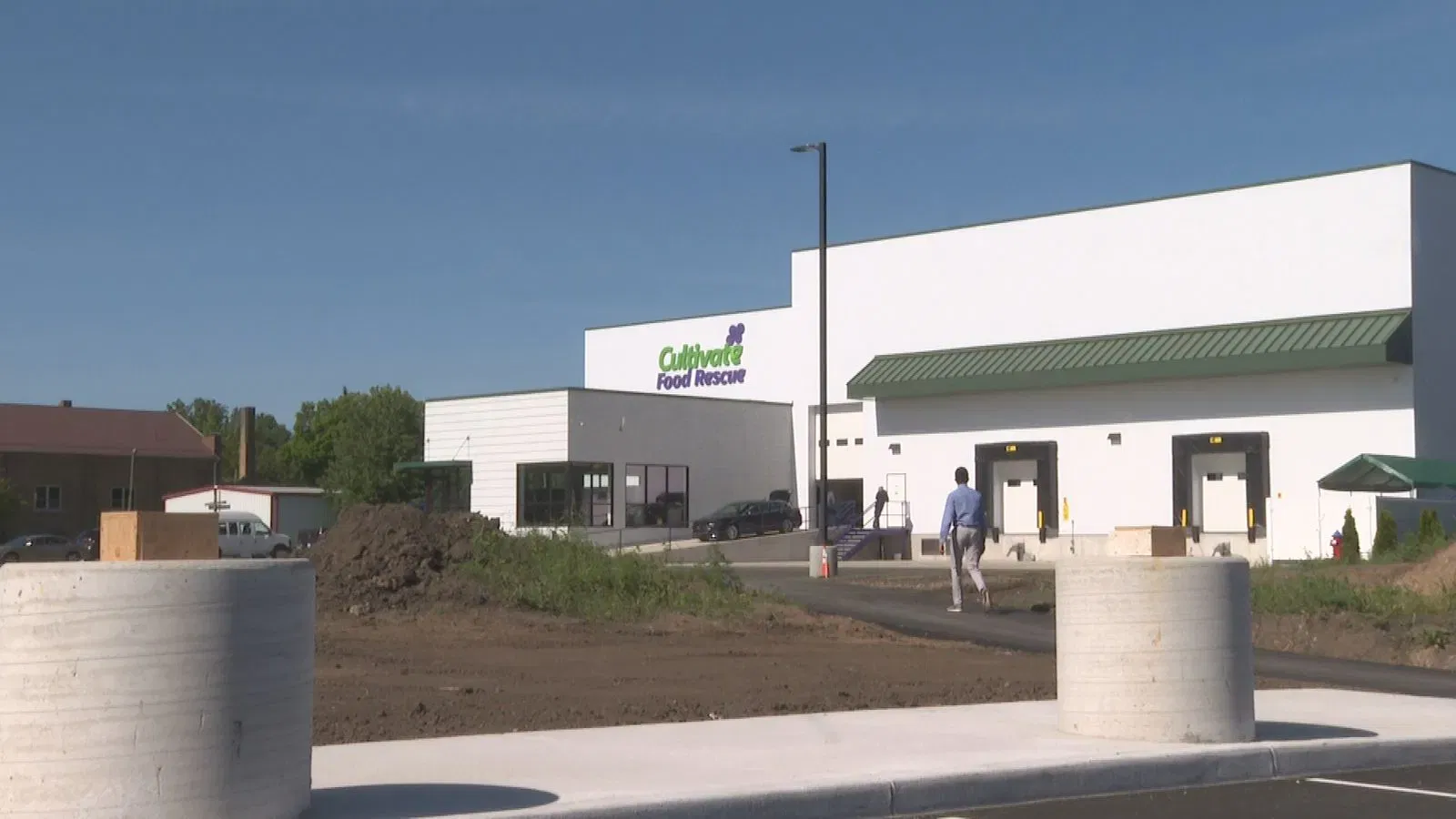
We’re excited to share a major milestone in Cultivate Food Rescue’s mission to fight food insecurity and eliminate food waste: the opening of our brand-new, 22,000-square-foot cold storage facility in South Bend. This purpose-built warehouse is more than just a space—it’s a leap forward in how we serve our communities and scale our impact.
Our new 22,000-square-foot cold storage facility in South Bend is open, fully operational, and already changing the game for how we fight hunger in northern Indiana.
This warehouse isn’t just about space. It’s about scale. It’s the engine that will let us rescue and distribute nearly 20 million pounds of food a year. That’s up from just over 2 million. A nearly tenfold increase—and all of it headed to local pantries, soup kitchens, schools, and families who need it most.
Built to Move Food Fast
Inside, the building is split between two zones. One refrigerated for fresh produce. One frozen for meat and longer-term goods. Right now, everything is stored on the floor. But it won’t stay that way. The building was designed to be racked out to six tiers tall, with room for 2,200 pallet spaces once fully built out.
“We don’t want to store food—we want to get it to the people who need it,” said Bob Herbert, our Director of Operations, in a recent tour with ABC57.
Food comes in from restaurants, retailers, and wholesalers. It’s quickly sorted, temperature-controlled, checked, and sent right back out to the community. No long wait. No waste.
A Major Milestone—Faster Than Ever
Here’s what surprised even us: Since opening the building in mid-2024, we’ve rescued more than 10 million pounds of food. That’s the same total we hit in our first seven years combined. It took less than nine months to do it with this new facility.
That kind of scale means more food on tables, fewer families struggling, and a real shot at meeting the needs of almost every food-insecure child in our region. We’re now supplying more than 200 partners across St. Joseph, Elkhart, and Marshall counties. And we’re just getting started.
Smarter, Greener Infrastructure
This facility also reflects our commitment to doing things responsibly. Despite being more than three times the size of our old warehouse, it only uses slightly more energy. It’s efficient by design—right down to the high-efficiency compressors and fully sealed dock bays.
And because rescued food would otherwise end up in landfills, the building helps cut greenhouse gas emissions too. It’s not just hunger relief. It’s climate action.
What It Means for the Region
With this kind of capacity, we’re now able to support up to 62% of adults in poverty and reach nearly every food-insecure child across our service area. And as our partnerships grow, so does our reach.
Jim Conklin, our co-founder and executive director, said it best: “It really is a culmination of seven years of hard work. To be able to make ten times that impact in the future is super important.”
So—What’s Next?
More racking. More food. More meals packed. More volunteers. More reach. More kids and families served every week.
We’re grateful for every donor, every food partner, and every volunteer who helped get us here. This facility is just the start of what’s possible.
Media Coverage of the Event